Active pensions, electronic allowances, income thresholds, electric cars – as 2026 begins, employers are again facing numerous challenges in payroll and social security. These have come about from recent court decisions, the authorities changing their interpretations and new legal regulations.
On November 20, 2025, the Federal Fiscal Court (BFH) made an important decision regarding the tax treatment of parking space costs in the context of double household management during an oral hearing (case no. VI R 4/23). The central question was whether, following the revision of Section 9 (1) sentence 3 no. 5 of the German Income Tax Act (EStG), parking space costs should be classified as other additional expenses or as accommodation costs limited to €1,000.
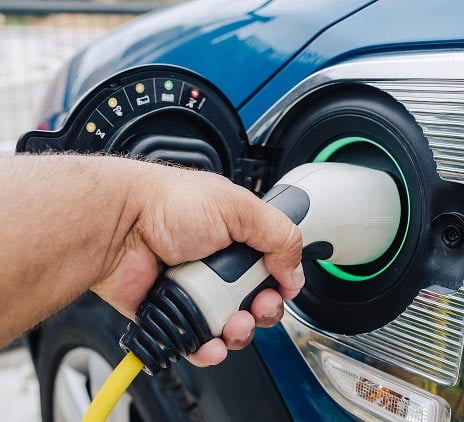
Electromobility continues to gain importance—and there are also significant new developments in tax law: Starting January 1, 2026, the electricity price allowance will come into effect. Its purpose is to enable both employers and employees to settle electricity costs much more easily when the charging of a company car is initially paid privately, for example via a home charging station. The basis for this is the average annual electricity price for private households published by the Federal Statistical Office. In the future, employers can choose between providing proof of actual costs and using the new electricity price allowance. This not only reduces administrative effort but also allows for optimal tax treatment when reimbursing electricity costs.
On October 15, 2025, the German Federal Government issued the draft for the so-called "Flexible Retirement Act" (“Aktivrentengesetz”). The aim of this law is to provide tax relief for employees who continue to work in jobs subject to social security contributions after reaching the statutory retirement age.
Recent legislative changes and upcoming administrative guidance have brought important updates to the (wage) tax treatment of employer-provided benefits, particularly regarding incentives for company cars with alternative engines and reimbursement of electricity costs. In this article, we provide an overview of the current (wage) tax regulations for company cars and outline the differences between lump-sum and itemized reimbursement models for charging electric vehicles. Employers will gain practical insights into how to implement these benefits in a tax-optimised and legally compliant manner.