BFH Insights
Weekly, precise classifications of current Federal Fiscal Court rulings. All relevant decisions explained concisely and summarised in a practical manner.
Filter insights by:

Weekly, precise classifications of current Federal Fiscal Court rulings. All relevant decisions explained concisely and summarised in a practical manner.

2024 – the number of companies that have been hacked is growing. According to the statistics of the Hiscox Cyber Readiness Report 2023, worldwide around 50 per cent of all businesses have already been the victim of a cyber-attack – and there was a dramatic rise in Germany in 2022. The number of reported cases is growing year by year. The question is no longer wheth-er a company will be attacked but when. In an attack, what should you do?

Including an increase in funding volumes and faster payout. We’ve put the most important details together below.



The legislator has amended the transfer pricing documentation obligations, which were tightened at the end of 2022, and brought forward their application significantly. The following article explains what companies should now bear in mind.



If the person giving third-party notice does not provide information on an upcoming date for proceedings, the information on the status of the dispute under Section 73 of the German Code of Civil Procedure (Zivilprozessordnung – ZPO) is considered incomplete. The third-party notice thereby neither has the effect of suspending the statute of limitations in terms of material law nor that of procedural intervention. This is what Düsseldorf Higher Regional Court decided in its judgment of 16/05/2024 (2 U 75/23), cf. IBRRS 2024, 2416.

The Federal Court of Justice’s decision on ambiguous terms related to the environment (specifically, the case was about using “climate neutral” in relation to confectionery, but it also applies generally to terms like “carbon-neutral”, “greenhouse gas neutral”, “environmentally friendly”, etc.) set strict standards on environmentally related advertising. Companies must already be clear and unambiguous in their advertising when using terms related to the environment, otherwise they can face cease and desist letters from associations or competitors. They can also receive bad publicity for greenwashing.

Italy was the first country in the EU to implement mandatory e-invoicing as of January 2019 in the B2B and B2C segment. As part of our series “E-invoicing in the EU” we highlight the growing relevance of e-invoicing by examining Italy’s successful implementation and offer valuable insights for businesses that are looking to navigate this change.


The EU Commission’s ViDA initiative marks a new era in VAT compliance. In future, digitalisation will be the key step to optimising processes and meeting new requirements. Tax engines can play an important role here.


The Federal Fiscal Court (Bundesfinanzhof) had already blocked applying expanded trade tax reductions to lettings between two controlled companies belonging to the same consolidated tax group in the past. According to the Federal Fiscal Court’s latest judgment, of 11/07/2024 (III R 41/22), this is also to apply if the renting controlled company sublets the properties to third parties. This may result in additional tax burdens in the consolidated tax group in the subletting model.

The EU list of non-cooperative jurisdictions for tax purposes (EU blacklist) was updated on 8 October 2024. This has implications for the application of the Tax Haven Defence Act (StAbwG) for the countries concerned. Extended defensive measures will also apply to some of the remaining tax havens on the list from 2025.


If a construction contract is terminated for an important reason under Section 8(2) of the German Construction Contract Procedures (VOB/B), this is valid and permissible for insolvency law. But creating a set-off situation (payment of work against claims for damages) is detrimental to the creditor and can be contested.

The European Court of Justice (ECJ) thwarts the plans laid down in the German government’s coalition agreement to strengthen German corporate code termination. The Societas Europaea (SE) remains attractive, particularly to the mid-market.


Asset management GmbHs (companies with limited liability) are still the subject of discussion. Many asset managers, trading platforms and investment consultants talk this structure up as a “tax-saving model”. But what’s actually behind it? Let’s have a look at the law and how it’s implemented in practice.



Legislation and case law have massively increased the importance of having a proper and effective HR compliance management system (HR CMS). If the rules are not complied with, directors, board members and the supervisory board can be directly liable. This liability risk can be avoided by using the right instruments to prevent such infractions. An HR compliance management system (CMS) can help here. We’ll design a customised HR CMS for you and give you assistance with implementing it, or we can audit your existing HR CMS. You’ll gain assurance, be able to identify risks and comply with your statutory duties.


In this article, you can read about the challenges that arise when preparing a purchase price allocation.



In the world of tax, compliance management systems (tax CMS) continue to be a hotly debated topic. The discussion gained new momentum from the current test phase (Section 38 of Article 97 of the Introductory Act to the Fiscal Code [EGAO]) for DAC7. Tax authorities may now promise specific simplifications for future tax audits if the current audit has confirmed the effec-tiveness of the existing tax CMS.


Last year the Federal Fiscal Court (Bundesfinanzhof – BFH) decided that paying a pension and salary to an owner-director at the same time does not mean that in principle the pension is to be classified as a hidden profit distribution. The tax authorities only partially adopted the principles of the judgment in the latest amendment of its Federal Ministry of Finance (BMF) circular. Cases where directors work part-time are critical.



The new guideline deals in detail with the allocation of wages in cases in which employees receive both taxable and tax-free wages in Germany. In particular, the application of the daily tax table for salary payment periods as of 1 January 2025 is addressed.

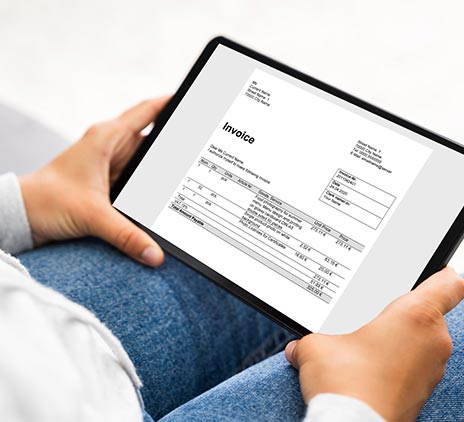
The EU is pushing the modernisation of the VAT system with the planned introduction of unionwide electronic invoicing (“e-invoices”). But in practical implementation, there are great differences between the EU Member States. In this article, we explain the main challenges that global businesses face and point out how you can safely navigate through the different coun-tries’ various plans for implementation.
